The historical benchmark allows you to explore trends and changes in your results across your different surveys.
By analyzing historical data, you can better understand the factors that have influenced your past results and anticipate future challenges. This will help you make more informed strategic decisions based on concrete, fact-based analyses.
How to read it ?

On the first row, you will find the average positive opinion rates and the number of respondents for the different survey years.
The year displayed here corresponds to the year of the label applied for. For example, if your survey starts in October 2024, this data will appear in the 2025 column.
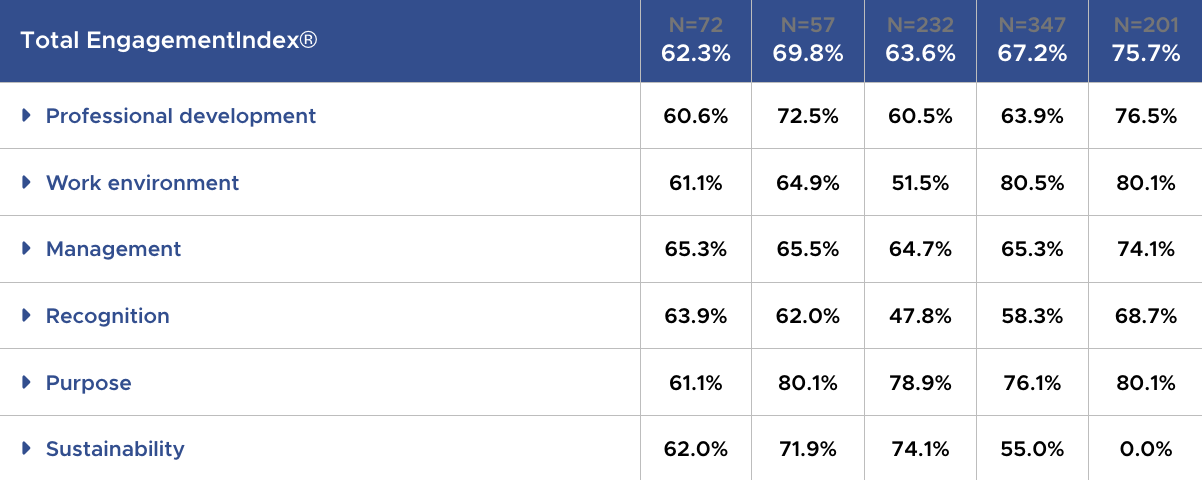
You will then find the positive response rate for each dimension.
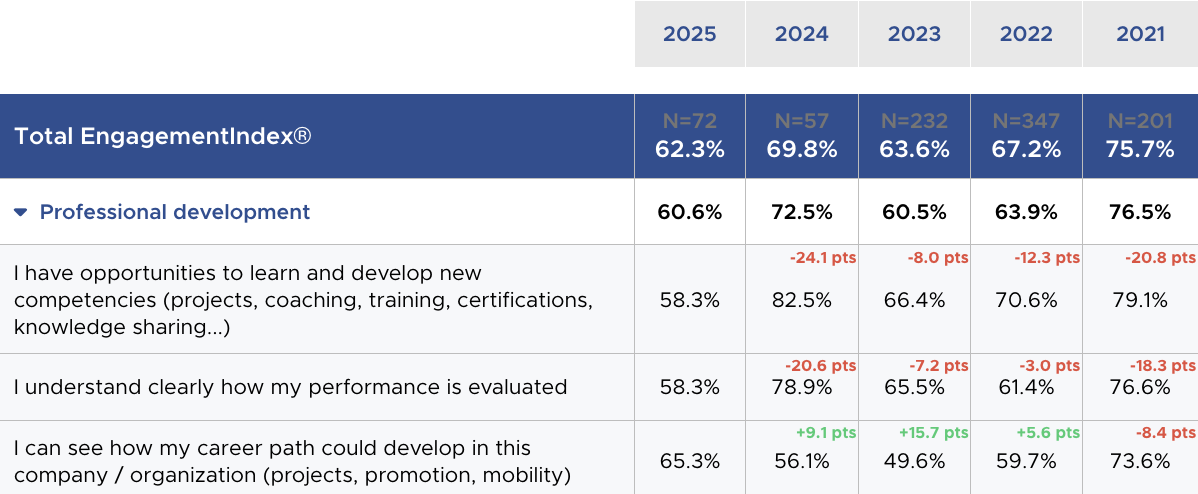
Finally, by expanding each dimension, you will find the associated questions.
You will also see the delta between the overall results of the latest survey and the previous ones.
The comparison is only made with the most recent survey; it does not represent a year-over-year linear trend.
N/A here means that the question did not exist in the previous year.